 203-874-7914
As homeowners trying to keep homes comfortable while reducing energy expenses, understanding SEER2 ratings is essential. This will help with being able to select the best system for improved AC efficiency in Milford, CT.
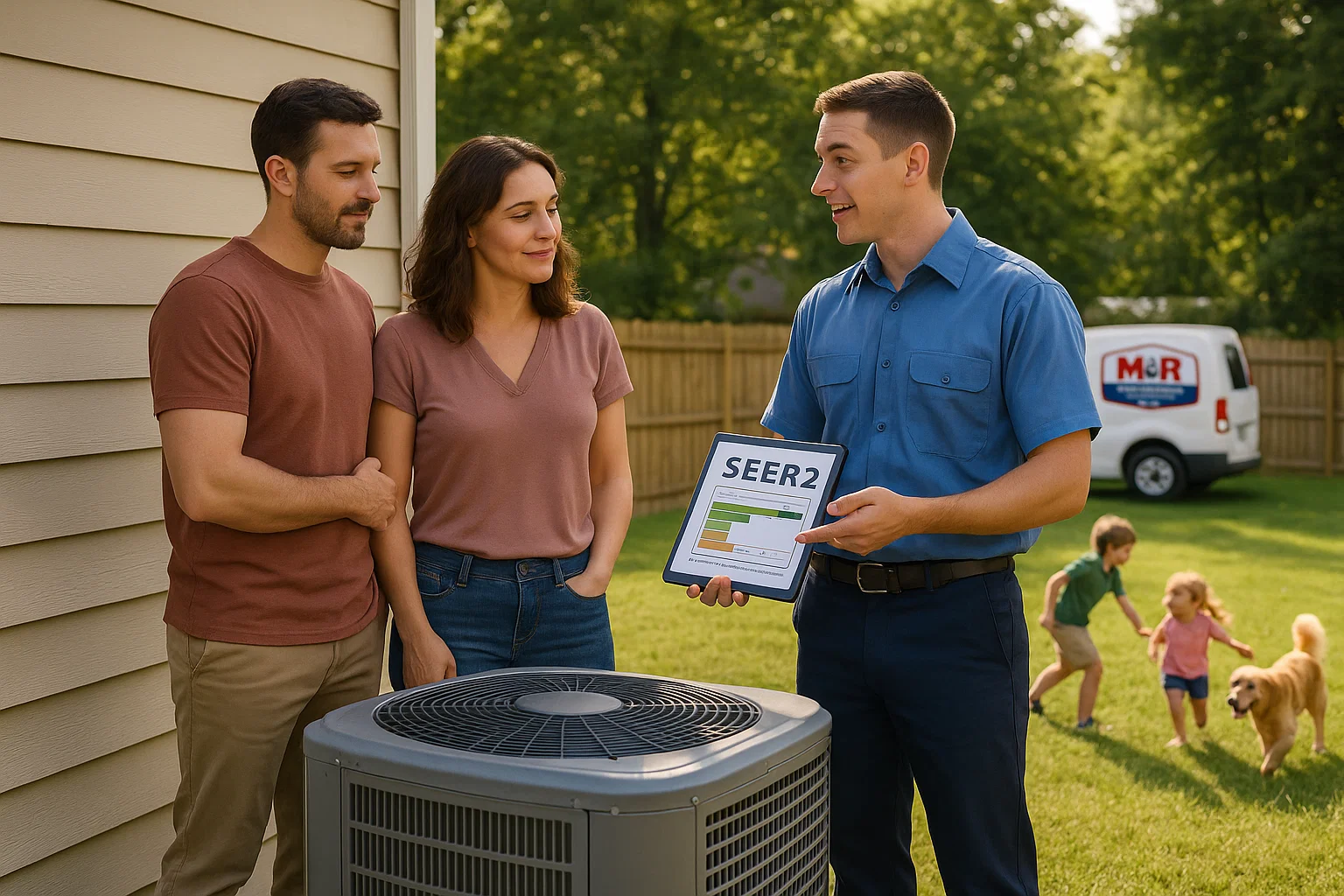
SEER2, or Seasonal Energy Efficiency Ratio 2, is the updated efficiency standard for air conditioners and heat pumps introduced by the US Department of Energy on January 1, 2023. It replaces the older SEER rating, offering a more realistic measurement by accounting for the real-world conditions your system faces every day. These updated standards also coincide with broader industry changes, including new 2025 refrigerant requirements homeowners should understand when planning future HVAC upgrades.
What SEER2 Measures
SEER2 calculates how much cooling (in BTUs) a system delivers per watt-hour of electricity consumed over an entire cooling season. The key difference from the original SEER rating is that SEER2 testing uses higher static pressure to better reflect actual operating conditions in most homes. This means a unit labeled “16 SEER2” today performs more realistically than the old “16 SEER” rating would suggest, giving homeowners a clearer picture of real energy efficiency.
Minimum SEER2 Ratings by Region
The Department of Energy sets regional minimum efficiency standards based on climate needs. Connecticut falls into the Northern region of the US, where all new central air conditioners must meet a minimum SEER2 rating of 13.4. Here’s how the standards break down across the country:
- Northern U.S. (including Connecticut): Minimum 13.4 SEER2
- Southeast and Southwest: Minimum 14.3 SEER2 for smaller systems and 13.8 SEER2 for larger ones
If you’re replacing your AC system, it’s important to make sure the unit you choose meets or exceeds these updated requirements. especially as the industry continues navigating R410A phaseout replacing AC systems ahead of 2025 regulations.
Why a Higher SEER2 Rating Pays Off
- Energy Savings: The higher the SEER2, the more energy efficient the system is. Over time, that can mean significant savings on your utility bills. For example, a Connecticut household using a minimum-standard 13.4 SEER2 unit might spend around $1,100 a year on cooling costs. Upgrading to a 16 SEER2 system could bring that cost closer to $900 a year, and an 18 SEER2 unit could drop it even further, to around $700 a year. Over the lifespan of your system, often 15 to 20 years, that’s thousands of dollars in savings.
- Improved Comfort and Performance: Higher-SEER2 air conditioners often include advanced features like variable-speed compressors and smart thermostat compatibility. These upgrades help maintain a more consistent temperature throughout your home, control humidity better, and reduce noise levels. Many higher-rated units also qualify for federal tax credits and local utility rebates, which can help offset the initial cost of the upgrade.
Choosing the Right Unit
- Check Your Current Rating
If your current system is older, it likely uses the old SEER scale and may be much less efficient than today’s minimum standard. - Aim Higher Than the Minimum
For Connecticut’s warm and humid summers, consider investing in a unit with a SEER2 rating of 15 to 18 for the best balance of upfront cost and long-term savings. While higher-efficiency systems may cost more initially, understanding the AC replacement cost breakdown explained can help homeowners better prepare their budget and evaluate the long-term value of upgrading to a more efficient system. - Explore Incentives
Many utility companies offer rebates for installing high-efficiency AC units. Be sure to ask your installer about any local or federal incentives that could help lower the cost. - Work with a Professional
Always consult a qualified HVAC contractor to ensure your new system is sized correctly, installed properly, and running at peak efficiency.
Maximize Your Savings
In Connecticut, you’re required to install at least a 13.4 SEER2 unit, but going beyond the minimum makes sense for your comfort and your wallet. A modern, high-efficiency AC system will help you stay cool, lower your energy bills, and add value to your home for years to come.
Frequently Asked Questions
Question: What is a SEER2 rating and why does it matter for AC units?
Answer: SEER2 stands for Seasonal Energy Efficiency Ratio 2, a newer standard used to measure the efficiency of modern air conditioning systems. It reflects updated testing procedures that better represent real-world conditions. A higher SEER2 rating generally means the system uses less energy while providing the same level of cooling.
Question: How is SEER2 different from the older SEER rating?
Answer: SEER2 uses updated testing standards that more accurately reflect how HVAC systems operate in real homes. The new rating accounts for external static pressure and other factors affecting airflow. Because of the stricter testing conditions, SEER2 ratings often appear slightly lower than older SEER numbers for similar efficiency levels.
Question: What SEER2 rating should I look for when buying a new AC system?
Answer: The right SEER2 rating depends on your climate, budget, and energy efficiency goals. Higher SEER2 systems typically cost more upfront but can lower monthly energy bills. Many homeowners choose mid- to high-efficiency systems to balance installation cost with long-term energy savings and improved comfort.
Question: Do higher SEER2 ratings always mean better performance?
Answer: Higher SEER2 ratings indicate greater energy efficiency, but they are not the only factor to consider. Proper system sizing, professional installation, and overall system design also play a major role in performance. Even a high-efficiency unit may not perform well if it is improperly installed or sized.
Question: Can upgrading to a higher SEER2 system reduce energy costs?
Answer: Yes, upgrading to a system with a higher SEER2 rating can help reduce electricity usage because the unit operates more efficiently. Over time, the energy savings can offset the higher upfront cost of the equipment. Improved efficiency may also reduce wear on the system and extend its lifespan.
Heating and Cooling Experts Since 1959. Contact M&R Mechanical Services today with any questions about AC efficiency in Milford, CT.