 203-874-7914

Why Timely AC Replacement Matters
Replacing your air conditioning system at the right time is essential for keeping your home comfortable and your energy bills under control. HVAC professionals work closely with customers to understand their needs and ensure satisfaction throughout the replacement process. An efficient air conditioning system not only keeps the heat at bay but also helps you avoid the higher costs that come with frequent repairs and inefficient operation. Delaying replacement can lead to more costly breakdowns, increased energy consumption, and even potential safety hazards. For example, older systems may be more prone to electrical issues or, in rare cases, carbon monoxide leaks, especially if your AC is part of a combined heating and cooling system. Heat pumps, for instance, can function both as a heater and an air conditioner, providing year-round comfort and efficiency. By choosing to replace your system before it fails, you can enjoy reliable cooling, lower energy bills, and peace of mind knowing your home is safe and comfortable. Paying attention to the details of your system and installation is crucial to maximize efficiency and safety. During the initial in-home visit, the existing air conditioning system is thoroughly reviewed to collect important information for an accurate proposal. Quality assurance inspections during installation are performed to help prevent issues such as fire hazards, ensuring the system meets all safety and performance standards. Investing in a timely replacement is the best way to ensure your air conditioning system runs efficiently and cost-effectively for years to come.
When should you replace your heating system?
You should replace your heating system if it’s more than 10 to 15 years old, needs frequent or costly repairs, causes higher energy bills, or no longer heats your home evenly. These signs indicate your system is inefficient and likely to fail when you need it most.
Signs It’s Time for a New AC System
A well-functioning air conditioning system is crucial for your comfort, especially when summer rolls in. However, even the best AC units don’t last forever. If you know your system may struggle to keep up this summer, it may be time to consider a replacement. Many homeowners also consider heating replacement at the same time as, especially if they have combined heating and cooling systems. Modern heating systems, such as furnaces, boilers, and heat pumps, offer improved efficiency and performance, with some achieving efficiencies as high as 98.5%, making heating replacement a smart investment for aging or inefficient systems.
When comparing heating systems, boilers are central to traditional setups and can use fuels like oil or propane. Electric furnaces typically have higher efficiency ratings but often come with a higher cost to operate due to electricity prices. Oil furnaces and propane-powered systems are common alternatives where natural gas is unavailable. Replacing an old system, such as an outdated central air conditioner, with a new boiler or a new furnace can significantly improve efficiency and comfort in your home. If you’re evaluating whether upgrading your HVAC system is the right move, understanding when to replace old AC can help guide your decision.
Upgrading your AC in the spring is the smart choice, ensuring you stay ahead of the summer heat and get your new system installed before peak season. Learn why spring is the best time for AC installation in Connecticut and take advantage of better scheduling and energy savings. Fall is also an excellent time for new AC installation, as lower demand can mean better pricing and faster service from contractors.
Top Signs Your AC System Needs Replacement
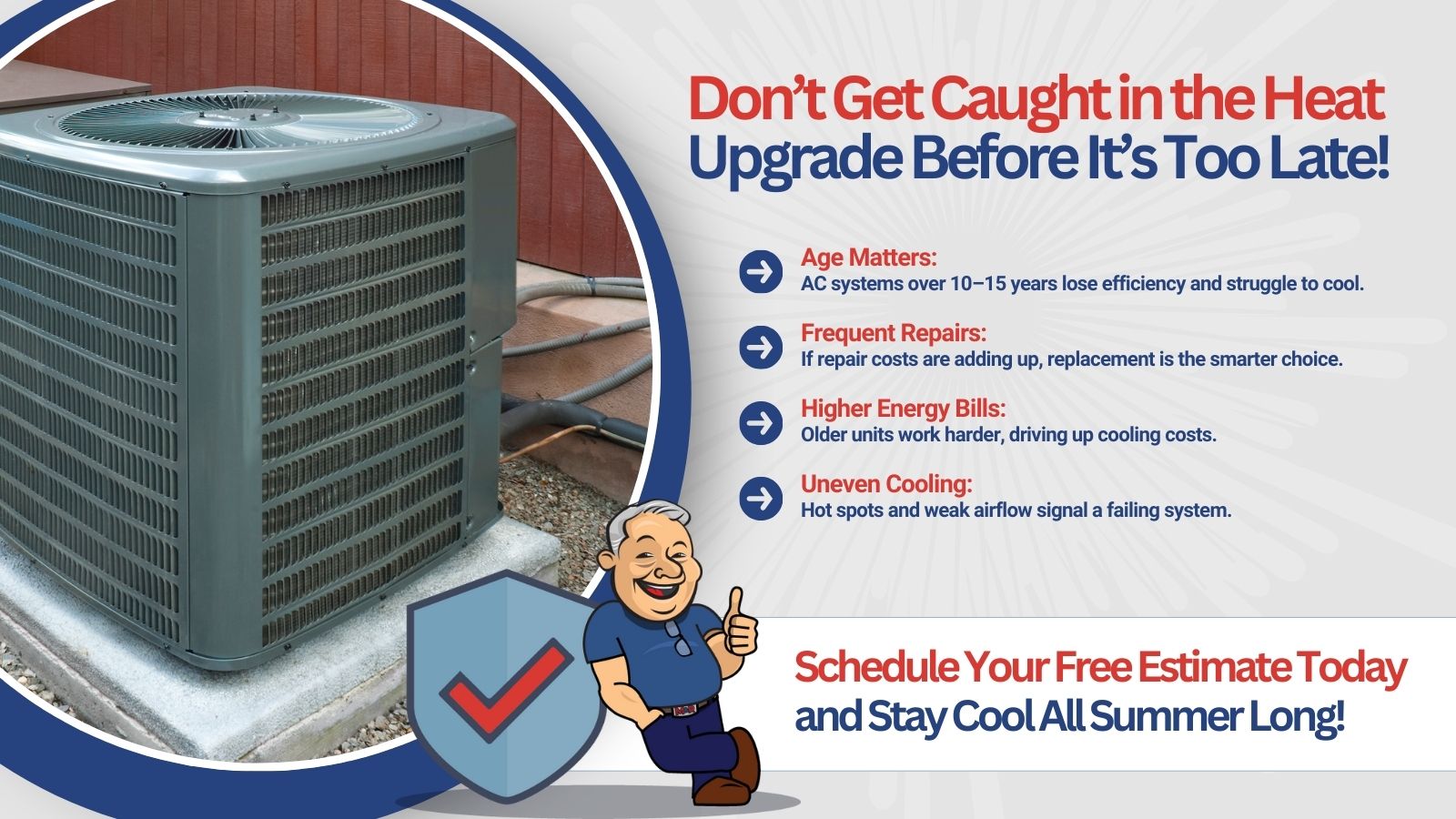
Your AC Is Over 10–15 Years Old
Most air conditioning systems have a lifespan of 10 to 15 years, depending on maintenance and usage. Most furnaces also have a typical lifespan of 20-30 years, and replacing both systems together can maximize efficiency and comfort. If your unit is approaching or has surpassed this age, it’s likely becoming less efficient and more prone to breakdowns. Aging furnaces may develop issues with burners or the heat exchanger, and unusual noises such as knocking or popping can be a warning sign of these problems. Outdated heating systems often operate with efficiencies ranging from 56% to 70%, which can significantly impact energy costs. If you’re unsure whether upgrading now or repairing your current system is the better choice, comparing AC installation vs repair can help you make a more informed decision. Newer models are designed to be more energy efficient, environmentally friendly, and equipped with smart technology to lower energy costs.
Frequent Repairs
Are you calling for AC repairs more often than usual? If your HVAC equipment is frequently breaking down, it may be time for it to be replaced. Outdated or malfunctioning equipment can lead to higher costs and less reliable performance, making replacement necessary for efficiency and safety. If your system constantly needs fixes and the repair bills are piling up, replacing the unit may be a better long-term investment. A good rule of thumb: if a repair costs more than 50% of a new system, replacement is the better option. Programmable thermostats can improve the efficiency of heating systems when paired with proper maintenance, helping you get the most out of your investment. For more insight into deciding whether to repair or replace, check out our breakdown of when it’s time to say goodbye to your old AC.
Rising Energy Bills
Have you noticed your energy bills creeping up despite no changes in your usage? One way to measure your system’s efficiency is to compare your current electricity usage to previous years, if you see your electricity consumption rising, it may indicate your system’s performance is declining. Your utility bills are increasing each season, which is often a sign that your system is no longer operating efficiently. As AC units age, they lose efficiency, meaning they need to work harder (and use more energy) to cool your home. Heating systems that use hot water or hot air, such as boilers or radiators, can also become less efficient over time, causing increased energy consumption and higher bills. Upgrading to a high-efficiency unit can lead to significant savings on your monthly energy bills.
Uneven Cooling and Poor Performance
If some rooms in your home feel colder than others or your system struggles to maintain a consistent temperature, your AC may no longer be able to distribute air properly. Uneven heating is also a common issue in homes with aging or poorly maintained heating systems, indicating potential problems with the HVAC system or insulation. Homes with radiant floor systems or other floor-based heating methods can also experience uneven temperatures if the floor heating system is not functioning properly.
Weak airflow, frequent cycling on and off, or struggling to reach the thermostat setting are clear indicators that your AC is failing. Both AC and heating systems rely on the proper distribution of heated air or cooled air to maintain comfort throughout the home.
Understanding AC Efficiency Ratings
When considering a new air conditioning system, understanding efficiency ratings is key to making a smart investment. The efficiency of an AC or heat pump system is measured by its Seasonal Energy Efficiency Ratio (SEER) and Energy Efficiency Ratio (EER). The higher the SEER and EER, the more energy efficient the system is, meaning it uses less energy to provide the same amount of cooling or heating. For homeowners looking to reduce heating bills and cooling costs, choosing a heat pump or air conditioning system with a high efficiency rating is a wise move. ENERGY STAR certified systems are a great benchmark for energy efficiency, helping you identify models that will save you money over time.
To ensure your new AC installation is properly sized and operates at maximum efficiency, it’s essential to use the ACCA Manual J load calculation. This industry-standard manual provides a systematic method for determining the correct size of your air conditioning system based on your home’s specific needs.
Don’t forget to consider other factors like the system’s cooling capacity, airflow, and noise level to ensure your new unit is the perfect fit for your home. Additionally, the thermal efficiency of heating systems is often represented by AFUE, which measures how efficiently a system converts energy into heat. Some boilers use steam to distribute heat throughout the home, and their efficiency can also be evaluated using AFUE ratings. Upgrading to a more efficient system not only lowers your energy bills but also helps your home stay comfortable all year long.
AC System Components
A central air conditioner is more than just a single box that cools your home—it’s a carefully engineered system made up of several key components, each playing a vital role in delivering efficient, reliable cooling. Understanding these components can help homeowners appreciate the importance of a professional air conditioning installation and the factors that influence the total cost, efficiency, and long-term performance of their new air conditioner.
At the heart of every air conditioning system is the compressor, often referred to as the “engine” of the unit. The compressor’s job is to pressurize the refrigerant and circulate it through the system, enabling the transfer of heat from inside your house to the outdoors. Working alongside the compressor is the condenser coil, which is typically located outside the home. Here, the hot refrigerant gas releases its heat to the outside air and condenses back into a liquid.
Inside your home, the evaporator coil absorbs heat from the indoor air as the refrigerant passes through it, cooling the air before it’s distributed throughout your house. The expansion valve regulates the flow of refrigerant into the evaporator coil, allowing it to expand and cool rapidly. The refrigerant itself is the special substance that moves heat from inside to outside, making the cooling process possible.
Supporting these main components are several other essential parts. The air handler—which houses the blower motor and evaporator coil—circulates cooled air through your ductwork, ensuring every room receives the right amount of cooling. The thermostat, usually mounted on a wall inside your home, acts as the control center, allowing you to set your desired temperature and manage the operation of your AC system.
The suction line and liquid line—together known as the line set—carry refrigerant between the indoor and outdoor units. Proper sizing and insulation of these lines are crucial for efficient operation and to prevent energy loss. The condensate drain line is another important component, safely channeling away the moisture that collects as your system removes humidity from the air.
When it comes to the installation process, every step matters. The job site must be prepared for safe and efficient work, including removing the old unit, setting a new pad if needed, and ensuring all electrical wiring and gas connections are up to code. Licensed professionals use special equipment to handle refrigerant safely, connect the line set, and mount the new unit securely. Proper installation not only ensures efficient operation but also helps prevent other problems like air leaks, noise, or premature wear on components.
The total cost of a new air conditioning system includes not just the equipment itself, but also the labor, materials, and any special equipment required for a complete, code-compliant installation. Investing in a high-efficiency air conditioner can help you save on energy costs over time, while regular maintenance—such as cleaning coils and checking the blower motor—will keep your system running smoothly and extend its lifespan.
In summary, a central air conditioner is a complex system made up of many interconnected components, all of which must work together for optimal cooling and efficiency. By understanding the role of each part and the importance of professional installation, homeowners can make informed decisions that ensure comfort, efficiency, and peace of mind for years to come. Always trust a licensed professional to handle your air conditioning installation, so you can enjoy reliable operation and lower energy costs throughout the life of your system.
Heating System Options
When it’s time to replace your heating system, understanding the different options available can help you make the best choice for your home’s comfort and efficiency. From traditional furnaces to innovative heat pump systems and alternative fuel sources, each type of heating equipment offers unique benefits and considerations. Here’s a closer look at the most common heating systems to help you decide which is right for your needs.
Traditional Furnaces
Traditional furnaces remain a popular choice for home heating, especially in regions with cold winters. These systems generate heat by burning fuel, most commonly natural gas or oil, and then distribute the heated air throughout your house using a network of ductwork. Natural gas furnaces are known for their reliability and ability to provide consistent heat, while oil furnaces are sometimes used in areas where natural gas isn’t available.
When evaluating a traditional furnace, it’s important to consider the efficiency rating, measured by the Annual Fuel Utilization Efficiency (AFUE). A higher AFUE means the furnace converts more fuel into usable heat, making it more energy efficient and cost-effective over time. High efficiency natural gas furnaces, with AFUE ratings of 90% or above, can significantly reduce your energy bills compared to older models. However, traditional furnaces may require more frequent repairs and regular maintenance, especially as they age. While the initial installation cost can be lower than some alternatives, ongoing maintenance and the potential for higher fuel costs should be factored into your decision. If your current system is experiencing frequent repairs or has a low efficiency rating, upgrading to a new, high efficiency furnace could be your best bet for reliable, efficient home heating.
Heat Pump Systems
Heat pump systems are gaining popularity as a highly efficient and versatile solution for both heating and cooling your home. Unlike traditional furnaces that generate heat by burning fuel, heat pumps work by transferring heat from the outside air into your home during the winter, and reversing the process to provide cooling in the summer. This method of moving heat, rather than creating it, allows heat pumps to achieve impressive efficiency ratings, sometimes delivering three or more units of heat for every unit of electricity used.
One of the biggest advantages of a heat pump system is its ability to lower heating bills and reduce your home’s carbon footprint. Because heat pumps don’t rely on combustion, they produce no direct emissions and can be a more environmentally friendly option. When considering a heat pump, it’s important to choose the right size and ensure professional installation for optimal performance. A properly installed heat pump system can provide years of efficient, low-maintenance comfort, helping you avoid costly repairs and keep your energy bills in check. If you’re looking for a system that offers both heating and cooling, and want to maximize energy efficiency, a heat pump could be the ideal upgrade for your home.
Alternative Fuel Sources
For homeowners interested in reducing their reliance on traditional fuels and maximizing energy efficiency, alternative fuel sources like geothermal and solar-powered heating systems are worth considering. Geothermal systems harness the stable temperatures below the earth’s surface to provide consistent, efficient heat, while solar heating systems use the power of the sun to warm air or water for your home. These systems can dramatically lower your energy bills and reduce your environmental impact, making them an attractive option for those looking to invest in sustainable home heating.
While the upfront cost of installing a geothermal or solar heating system can be higher than that of a traditional furnace or heat pump, the long-term savings on energy bills and reduced maintenance needs often offset the initial investment. Working with an experienced heating contractor is essential to assess your home’s suitability for these systems, as factors like property size, soil conditions, and sun exposure can affect installation and performance. Upgrading to an energy efficient heating system powered by alternative fuels not only helps you save money but also supports a cleaner, greener future for your household. If you’re ready to explore the latest in home heating technology, ask your contractor about geothermal, solar, or other innovative options that can be tailored to your needs.
What to Expect: AC Replacement Costs and Benefits
The cost of replacing your air conditioning system can vary depending on the type of system, its size, the efficiency rating, and the complexity of the install. The price of a new HVAC unit includes both the equipment and the professional labor required for installation. On average, homeowners can expect to pay between $3,000 and $10,000 for a new central air conditioning system, including installation. If you want a more detailed overview of equipment, labor, and other factors that influence pricing, review this guide to AC replacement cost breakdown. Installation costs also cover necessary supplies such as wiring, mounting hardware, and disconnect boxes. Key components like the filter drier and refrigerant are installed at the factory to ensure quality and safety. While this may seem like a significant investment, the long-term benefits make it worthwhile. Upgrading to a new, energy efficient system, such as a high-efficiency heat pump or natural gas furnace, can help you save up to 40% on your energy bills, reduce the need for frequent repairs, and provide more consistent comfort throughout your home. Many utility companies and government programs also offer rebates and incentives for installing energy efficient heating and cooling systems, which can help offset the initial cost. By working with a trusted heating contractor, you can explore the best options for your home and budget, ensuring your new system delivers reliable performance and long-term savings. Investing in a new AC system is not just about staying cool, it’s about making your home more efficient, comfortable, and valuable for years to come.
Benefits of Replacing Your AC System in Spring
If you’ve noticed any of the signs above, spring is the ideal time to upgrade your AC system. Here’s why: Scheduling your replacement in spring gives you time to plan for all the steps involved in a smooth and efficient new AC installation.
Avoid the Summer Rush
During peak summer months, HVAC companies get booked fast, and emergency breakdowns become more common. By scheduling an installation in the spring, you avoid long wait times and last-minute stress. It’s also an ideal opportunity to pair your system upgrade with seasonal maintenance recommendations to ensure peak performance from day one.
Ensure a Comfortable Summer
The last thing you want is for your AC to fail on the hottest day of the year. Replacing your unit in spring ensures that your home stays cool without the risk of sudden breakdowns when temperatures soar.
Energy Savings Before Peak Usage
Newer AC systems are far more energy efficient, helping you reduce cooling costs even before summer starts. Investing in a high SEER2 (Seasonal Energy Efficiency Ratio 2) unit means lower utility bills and a more environmentally friendly home.
Post-Installation Checklist
Once your new air conditioner has been installed, it’s important to make sure everything is set up for optimal performance and long-term reliability. Here’s a comprehensive post-installation checklist to help you confirm that your air conditioning installation was completed correctly and your HVAC system is ready to keep your home cool and comfortable:
1. Confirm Power Supply and Electrical Panel Compatibility
Double-check that your new AC unit is receiving the correct power supply and that the electrical panel and wiring are up to code. Proper electrical connections are essential for safe and efficient operation.
2. Inspect for Air Leaks
Examine all ductwork, connections, and seals for any air leaks. Even small leaks can reduce your system’s efficiency and increase energy costs. Sealing any gaps ensures your air conditioning system delivers maximum cooling where you need it.
3. Test the HVAC System’s Operation
Turn on your new air conditioner and verify that it cools your home evenly and responds accurately to thermostat adjustments. Make sure the system cycles on and off as expected and maintains your desired temperature.
4. Review the Installation Process
Look over the installation work to ensure everything was completed properly. Confirm that:
- The new pad is level and stable
- The suction line is properly connected
- The condenser coil is clean and free of debris
5. Evaluate the HVAC Contractors’ Work
Confirm that your HVAC contractors completed all aspects of the job, including:
- Installing the new air conditioner
- Connecting the ductwork
- Securing all electrical wiring
6. Monitor Energy Costs
Keep an eye on your energy bills in the weeks following installation. A new, efficient AC system should help lower your energy costs compared to your old unit.
7. Test the Condensate Pump
If your system includes a condensate pump, make sure it’s operating correctly and draining water away from the unit without leaks or blockages.
8. Inspect the Job Site
The area around your new air conditioner should be clean and free of installation debris. Clear access to the unit is important for both safety and future maintenance.
9. Check the Blower Motor
Listen for smooth and quiet operation from the blower motor and ensure it’s properly connected to the rest of the system.
10. Review the Total Cost
Go over your invoice to confirm that the total cost matches your estimate and that there are no unexpected charges for labor, materials, or special equipment.
11. Verify Special Equipment Installation
If your installation required a new line set, refrigerant handling, or other special equipment, confirm that these components are installed and functioning correctly.
12. Confirm Licensed Professional Oversight
Ensure that a licensed professional oversaw the installation and that all work meets local building codes and manufacturer specifications.
13. Check the New Pad
The new pad should be level and provide a stable, secure base for your air conditioner to prevent vibration and noise issues.
14. Test Mini Splits (If Applicable)
If you have a mini split system, verify that each indoor unit is cooling properly and communicating with the main outdoor unit.
15. Assess System Efficiency
Evaluate the overall efficiency of your new air conditioning system. It should provide consistent cooling, quiet operation, and improved comfort throughout your home.
By following this post-installation checklist, you can be confident that your new air conditioner is set up for safe, efficient, and reliable operation. Always work with experienced, licensed HVAC contractors for your air conditioning installation, and don’t hesitate to contact your installer if you have any questions or notice any issues after the job is complete. Your comfort and peace of mind are worth it!
Frequently Asked Questions
Question: What signs indicate it’s time to replace an air conditioning system?
Answer: Common red flags include your AC being over 10–15 years old, frequent repair calls, escalating energy bills, uneven cooling, weak airflow, or difficulty maintaining thermostat settings. These signal inefficiency and likely point toward replacement.
Question: Why is the age of the AC system important when deciding to replace it?
Answer: Most AC units last between 10–15 years. Beyond this, wear and reduced efficiency make breakdowns more frequent and repairs less cost-effective, making a replacement often the better long-term choice.
Question: At what point do frequent repairs justify replacing the AC unit?
Answer: If you’re calling for repairs multiple times a year or a single repair costs more than half the price of a new system, replacing is generally the smarter investment.
Question: How do rising energy bills relate to an aging AC system?
Answer: Older units lose efficiency, requiring more energy to cool your home even with unchanged usage patterns. Upgrading to a high-efficiency unit helps reduce utility costs.
Question: What other performance issues suggest it’s time for a new AC?
Answer: Signs like uneven temperatures, weak airflow, frequent cycling, strange noises or odors, and humidity control issues can all indicate that your system is failing and replacement may be warranted.
Heating and Cooling Experts Since 1959. Contact M&R Mechanical Services today for exceptional AC installation in Milford, CT.