 203-874-7914
As summer temperatures climb in Milford, CT, many homeowners find themselves facing a tough decision: should they repair their current air conditioning system or invest in a new one? At M&R Mechanical Services, we help customers navigate this dilemma with clear, honest advice rooted in decades of experience. While a repair might seem like the more affordable option upfront, the smarter choice depends on several factors, including the age, condition, and efficiency of your existing system and the long-term costs of keeping it running.
What makes central heating and air conditioning replacement smarter than repair?
Replacing your central heating and air conditioning is smarter when the system is over 10 to 15 years old, needs frequent repairs, causes high energy bills, or delivers uneven comfort. A new system offers greater efficiency, lower operating costs, quieter performance, and improved indoor air quality.
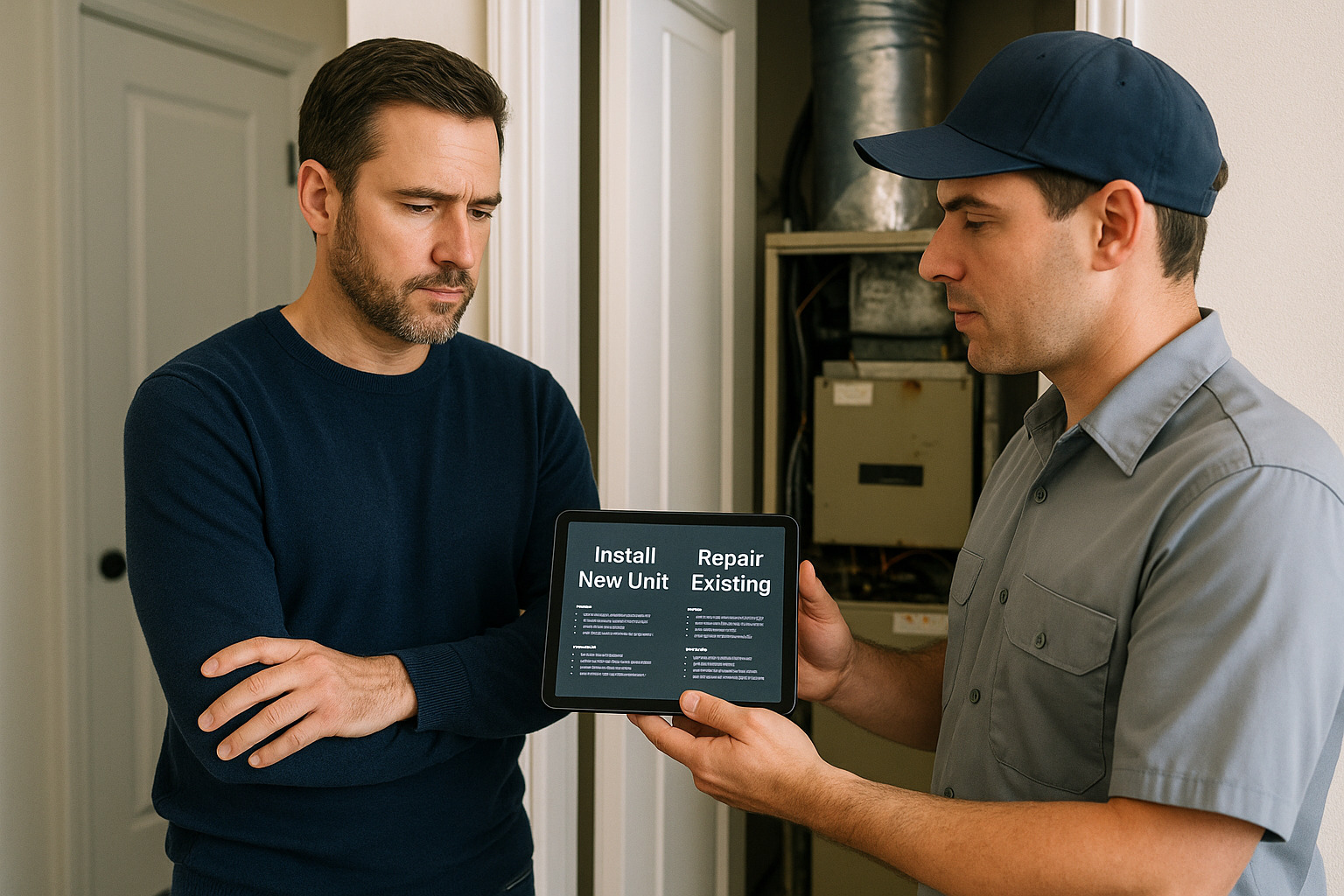
When Repairing Your AC System Is the Smarter Option
If your air conditioner is relatively new, generally under ten years old and has been well-maintained, a repair could be the most cost-effective option. Minor issues such as clogged filters, tripped breakers, faulty thermostats, or worn capacitors are often inexpensive and straightforward to fix, especially when handled by a qualified technician. If your system is still under a manufacturer or extended warranty, those repairs could come at minimal out-of-pocket cost. In such cases, a timely repair can restore performance, improve efficiency, and extend the lifespan of your unit, especially when you’re dealing with common AC repair situations.
When Replacing Your AC Is the More Cost-Effective Choice
However, if your system is over ten to fifteen years old and has required multiple recent repairs, a full replacement might be the more practical and cost-effective route. As AC units age, they tend to become less efficient and less reliable. You may notice increased energy bills, uneven cooling, or more frequent breakdowns. A good rule of thumb is this: if repair costs are more than half the price of a new unit, it’s time to consider upgrading. For homeowners wondering when to replace an AC, signs like frequent malfunctions and rising utility costs can be decisive indicators.
New air conditioning systems offer several modern advantages. They come equipped with higher SEER ratings (Seasonal Energy Efficiency Ratio), operate more quietly, integrate with smart thermostats, and provide better humidity control. These upgrades translate to improved comfort, reduced energy usage, and long-term savings. Additionally, new systems are backed by full manufacturer warranties, giving you peace of mind and protection from surprise repair bills. If you’re weighing your options, understanding the repair vs. replace decision can help clarify the smarter long-term investment.
Key Benefits of Installing a New Air Conditioning System
Choosing to install a new air conditioning system provides a host of benefits. You’ll experience more consistent cooling, better air distribution, and a noticeable drop in your monthly energy bills. Newer models are engineered for quiet, efficient operation and often include programmable or zoning features for customized climate control. Plus, today’s systems are designed with eco-friendliness in mind, helping reduce your carbon footprint.
Why Milford Homeowners Trust M&R Mechanical Services
At M&R Mechanical Services, we pride ourselves on giving customers the information they need, not pushing them toward unnecessary replacements. Our seasoned technicians perform thorough assessments of your current system and clearly explain your options, helping you balance upfront costs with long-term savings. Whether a focused repair is all you need or a full system replacement is the smarter path, we’re here to ensure your home stays cool, efficient, and comfortable.
Facing the repair-or-replace decision? Don’t go it alone. Schedule a consultation with M&R Mechanical Services today, and let us guide you toward the solution that works best for your comfort and budget.
Frequently Asked Questions
Question: How do I know whether to repair or replace my air conditioning system?
Answer: The decision often depends on the age of your system, repair costs, and overall performance. If your AC unit is older and requires frequent repairs, replacement may be the better long-term option. New systems are typically more energy efficient and reliable, which can reduce future maintenance and energy costs.
Question: When is repairing an AC unit the smarter choice?
Answer: Repairing your AC unit may be the better option when the system is relatively new and the problem is minor. If repair costs are low and the unit still runs efficiently, fixing the issue can extend the life of the system without the higher upfront expense of a full replacement.
Question: What are signs that replacing an AC unit is a better investment than repairing it?
Answer: Signs that replacement may be the smarter option include frequent breakdowns, rising energy bills, inconsistent cooling, and an aging system. When repair costs start adding up or the system struggles to maintain comfort, installing a new AC unit can provide better performance and long-term savings.
Question: What are the benefits of installing a new AC system instead of repairing an old one?
Answer: New AC systems are designed with improved energy efficiency and updated technology. These systems often cool homes more effectively while using less electricity, which can help lower monthly energy bills. Modern units may also offer better humidity control, quieter operation, and more consistent indoor comfort.
Question: How long should a typical air conditioning system last before replacement?
Answer: Most residential air conditioning systems last around 10 to 15 years with proper maintenance. As units approach the end of this lifespan, they may lose efficiency and require more frequent repairs. At that point, replacing the system can provide improved performance and energy savings.